
Supplies
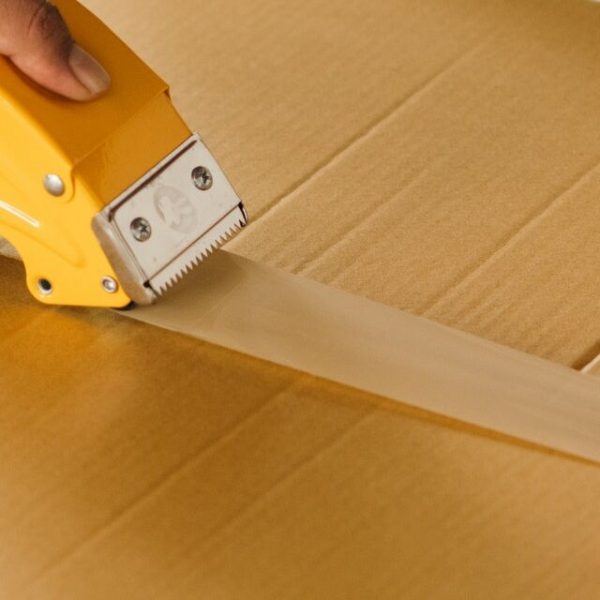
Turn your inventory into a useful material plan.
Review the boxes, kits, bags, covers, and furniture pads recommended from your room entries. Check individual types and use Room Details to understand where quantities come from.
Update remaining packing needs first. Compare recommendations with materials you have and review specialty sizes before buying or agreeing on charges.
An inventory tells you what is moving; Supplies helps you plan the materials to pack and protect it. After entering room items and remaining packing needs, review the recommended boxes, kits, bags, covers, and furniture pads in one place.
Start with the totals and individual quantities. Use the reference below when you want to understand a particular supply type.
Review the material plan
- On Room Sheets, update Needs To Be Packed, Misc Items Already Packed, and Articles To Be Moved.
- Open Supplies and review the individual box, kit, bag, cover, and pad quantities.
- Use Room Details to find contributing rooms. Correct inputs on that Room Sheet when something is incomplete.
- Review quantities with your mover or supplier before purchasing. Use Billing separately for agreed material charges.
The current Supplies sheet uses entered room detail. A rough Quick Estimates result does not by itself populate a matching rough-mode material plan here.
Trace a recommendation back to the room
If a quantity looks surprising, scroll to Room Details to see which rooms contribute. Return to the relevant Room Sheet and check its items and packing measurements. Correct the source entry there, then review Supplies again.
For example, a large kitchen recommendation could come from cabinet contents, dishes, glassware, or a duplicated entry. Review those inputs before reducing a number simply to match the boxes you already own.
Read Total Boxes correctly
Total Boxes combines Small, Medium, Medium Double-Walled, Large, Extra Large, Tall, Wardrobe, Book, File, and Dish Pack Boxes, plus Dish Saver Kits, Glass Pack Kits, and Soft Pack Bags. It is not a count of standard cardboard cartons alone.
Mirror/picture, sport utility, and TV boxes, furniture pads, and protective covers are separate rows outside that top total. Recorded Packed Boxes is separate from the recommended new-material total.
A non-zero recommendation is a planning need, not a purchase order. Supplier sizes, fragile items, packing choices, and inventory changes can affect final quantities.
Avoid counting contents twice
Use specific book, file, dish, or glass measures when appropriate. Do not also count those contents as general shelving. As miscellaneous contents are packed, reduce their remaining loose-content measure and record completed boxes. See Packing for a walkthrough.
For example, review the kitchen’s individual box and kit recommendations rather than purchasing from Total Boxes alone.
Agree on what is still needed
Compare recommendations with the usable materials you already have. Check specialty sizes against the actual items, and discuss who will supply the boxes and protection. Review material charges on Billing separately; quantities here do not automatically become prices.
Save after correcting room inputs or packing progress. Keep the material plan current as loose contents become completed boxes.
Box and protection reference
Use these descriptions to understand the individual recommendations. The sizes and capacities are estimator references; confirm the dimensions of the products you intend to use.
Standard Boxes
These are the primary box sizes used by the estimator. Each supply has a different job. CuFt means cubic feet. Actual supplier boxes may differ from these reference sizes.
Small Boxes
Reference size: 16-3/8 x 12-5/8 x 12-5/8 in. Capacity: 1.5 CuFt.
Small Boxes are the everyday choice for light mixed contents, drawer contents, and shallow shelving. They are useful when the contents are easy to distribute but should not be packed into one oversized container. Drawer space and shallow shelving commonly feed this recommendation.
Medium Boxes
Reference size: 18-1/8 x 18 x 16 in. Capacity: 3 CuFt.
Medium Boxes are the general-purpose workhorse of the packing plan. Use them for ordinary household contents that need more room than a Small Box but do not need the added strength of a double-walled box. General shelving and mixed cabinet contents commonly feed this recommendation.
Medium Boxes Double Walled
Reference size: 18-1/8 x 18 x 16 in. Capacity: 3 CuFt.
Medium Double-Walled Boxes use the same reference footprint as Medium Boxes but are intended for denser, heavier, or higher-strength packing needs. Books, kitchen cabinet contents, and other concentrated loads may call for this stronger construction.
Large Boxes
Reference size: 18 x 18 x 24 in. Capacity: 4.5 CuFt.
Large Boxes provide more volume for bulky but relatively light contents. They are a natural fit for pillows, throws, cushions, and other soft goods that can fill space quickly without being especially heavy.
Extra Large Boxes
Reference size: 24 x 18 x 24 in. Capacity: 6 CuFt.
Extra Large Boxes are for large, lightweight contents that need more volume than a Large Box. Their larger footprint can be useful for soft goods and other items that would be awkward to compress into smaller cartons. Do not use the extra volume as a reason to create an unsafe lifting weight.
Tall Boxes
Reference size: 15 x 15 x 42 in. Capacity: 5.5 CuFt.
Tall Boxes are narrow and vertically elongated. They are useful for tall or long box-shaped loads that do not fit comfortably in a regular carton. Pack the bottom carefully, keep the load stable, and confirm that the completed box can be carried safely.
Use the smallest box that fits comfortably, leave room for safe closure, and avoid making a box too heavy to lift safely. Double-walled boxes are a strength choice, not an automatic replacement for every standard box.
Specialty Boxes And Kits
The Supplies sheet may show specialty containers when the Room Sheet inputs or inventoried articles support them. These supplies solve particular packing problems rather than serving as general cartons.
Wardrobe Boxes
Wardrobe Boxes let hanging clothes stay on hangers during the move. They reduce folding and re-hanging work and are driven by the Linear Feet of Hanging Clothes input. Reference size: 24 x 24 x 48 in. Capacity: 16 CuFt.
Book Boxes
Book Boxes are sized for dense books. Keep weight in mind: fill them securely, but do not overfill them simply because the remaining space exists. Book shelf frontage feeds this recommendation. Capacity: 1 CuFt.
File Boxes
File Boxes organize documents and file contents into manageable loads. They are driven by file frontage rather than ordinary book volume and help keep records upright and easier to identify. Capacity: 1 CuFt.
Dish Pack Boxes
Dish Pack Boxes protect plates, bowls, and other kitchen dishware. They are paired with careful wrapping and should not be treated like ordinary loose contents boxes. Capacity: 1.85 CuFt.
Dish Saver Kits
Dish Saver Kits add dividers or fitted protection for dishes. They are a protection upgrade for fragile dishware, not a replacement for reasonable packing and labeling. Capacity: 1 CuFt.
Glass Pack Kits
Glass Pack Kits separate glasses and stemware so pieces do not strike each other in transit. The kit recommendation is driven by the amount of glassware, not simply by the number of kitchen boxes. Capacity: 1 CuFt.
Mirror/Picture Boxes
Mirror/Picture Boxes protect framed art, mirrors, and other flat fragile pieces. They are intended for careful vertical or flat handling according to the item, with the glass or finished face protected from contact. Capacity is item-sized; there is no single reference CuFt capacity for this specialty box.
Large Mirror/Picture Boxes
Large Mirror/Picture Boxes extend that protection to larger framed or mirrored pieces. Large dimensions do not make the item less fragile, so the box should be sized and handled as a specialty load. Capacity is item-sized; there is no single reference CuFt capacity for this specialty box.
Sport Utility Boxes
Sport Utility Boxes support long, irregular, or awkward sporting and utility items. They help contain items that do not fit well in standard cartons, but unusual shapes may still require a review with your mover. There is no single reference CuFt capacity because the box must suit the item shape.
TV Box Medium, Large, And Extra Large
TV Boxes are item-specific protection for televisions. The Medium, Large, and Extra Large rows match the general size of the television and help protect the screen during handling. Confirm the actual television dimensions before buying or assigning a box. These are item-specific protection rather than fixed-capacity cartons, so capacity varies by television size and supplier.
Specialty containers appear as individual supply rows. Use the Total Boxes definition above to see which types contribute to that total.
Bags, Covers, Pads, And Protection
Protection materials are part of the supply plan even though they are not standard boxes. Each one protects a different surface or shape.
Soft Pack Bags
Soft Pack Bags hold soft goods and flexible packed contents. They are useful when the contents need containment and protection without the rigidity of a carton. Reference capacity: 4 CuFt.
Twin, Full, Queen, And King Mattress Bags
Mattress Bags protect mattresses from dirt, moisture, and abrasion. The size should match the mattress so the bag can be closed and handled without forcing the mattress into an unsuitable package.
Loveseat Bags
Loveseat Bags protect loveseat upholstery during carrying, loading, and placement in the truck. They are protective covers for the furniture, not a replacement for pads where the frame or finished surfaces need cushioning.
Sofa Bags
Sofa Bags protect larger upholstered sofas from dust, scuffs, and contact with other loads. Measure the sofa and account for cushions and removable parts when deciding whether the bag is appropriate.
Chair Covers
Chair Covers protect individual chairs and similar upholstered pieces. They are useful for keeping fabric clean while still allowing the crew to carry the piece safely.
Furniture Pads
Furniture Pads protect finished surfaces during handling and loading. They are general protective equipment and may be needed even when an item has its own bag, cover, or specialty box.
Pads, bags, and covers protect articles; do not record them again as loose boxed contents. Room volume can include a furniture-pad allowance, so shipment volume is not limited to bare article dimensions.
Next steps
- Packing: update packing progress
- Room Sheets: correct source entries
- Room Summary: review the updated inventory totals
- Billing: review material charges
- Save and share: save or prepare the material plan
Discuss on Forum: MoverCalcs Estimator forum